The Story & History
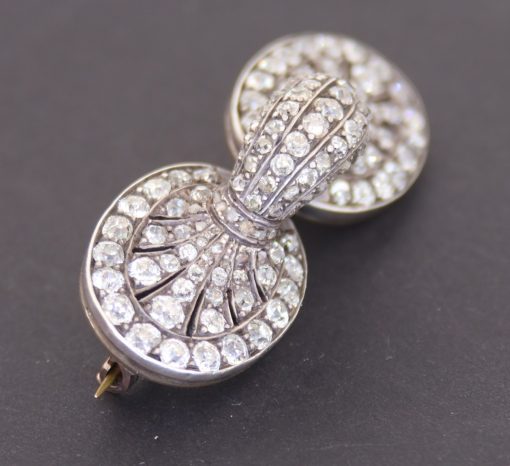
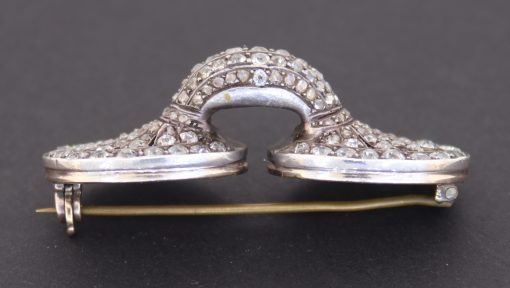
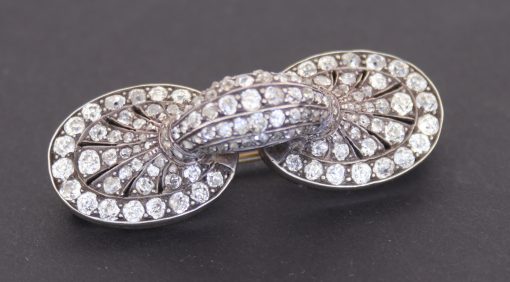
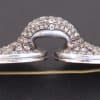
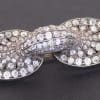
An important and exceptionally rare Irish diamond-set fibula brooch, distinguished by its unusual form and remarkable provenance. Only two examples are known: the present brooch and a second example preserved in the collection of the National Museum of Ireland.
The historical significance of this design is particularly compelling. An article published in the Irish Independent in June 1893 records that one of these fibula brooches was made as a wedding present for Princess May, the future Queen Mary of Teck. Princess May married the Duke of York, later King George V, in 1893. The contemporary newspaper reference provides an intriguing connection between this distinctive Irish jewel and the British royal family.
Design & Details
The brooch takes the form of an Irish fibula, an ancient fastening form that was revived with particular enthusiasm during the Celtic Revival of the 19th century. Here, the traditional form has been transformed into an important jewel, set throughout with a combination of brilliant cutBrilliant Cut is a style of diamond cutting designed to maximise the return of light through the stone and create a bright, lively appearance. The modern round brilliant cut is... More and old cut diamonds.
The contrast between the older-style diamond cuts and the distinctive Irish fibula form gives the piece a particularly fascinating character, combining historic Irish jewellery traditions with the luxurious materials and craftsmanship of late 19th-century jewellery.
The existence of only two known examples makes the survival of this brooch especially significant, with the other recorded example held by the National Museum.
Styling & Wearability
A highly distinctive statement brooch, equally suited to a collector of important Irish jewellery or to someone seeking an exceptional piece with genuine historical resonance. Its fibula form gives it an immediately recognisable character, while the diamond setting brings the richness and formality expected of an important late 19th-century jewel.
Its documented association with the Princess May story makes it particularly compelling for collectors interested in the intersection of Irish jewellery, royal history and the Celtic Revival.